In this article
- Why do insurance adjusters demand an Xactimate estimate from your roofing company?
- Should you write Xactimate estimates in-house or outsource during peak storm season?
- How do you align aerial measurements and photo documentation to support your scope?
- What line items do insurance adjusters consistently leave off roof scopes?
- What is the 25% rule for roofing in storm restoration?
- Should you show a roofing contractor insurance estimate to compare against your initial scope?
- How Storm Xactimate handles this for you
- Frequently Asked Questions
- What files should a roofing contractor provide to a carrier?
- Can overhead and profit (O&P) be included on every roofing estimate?
- Why do adjuster estimates often show a lower waste percentage than the contractor's scope?
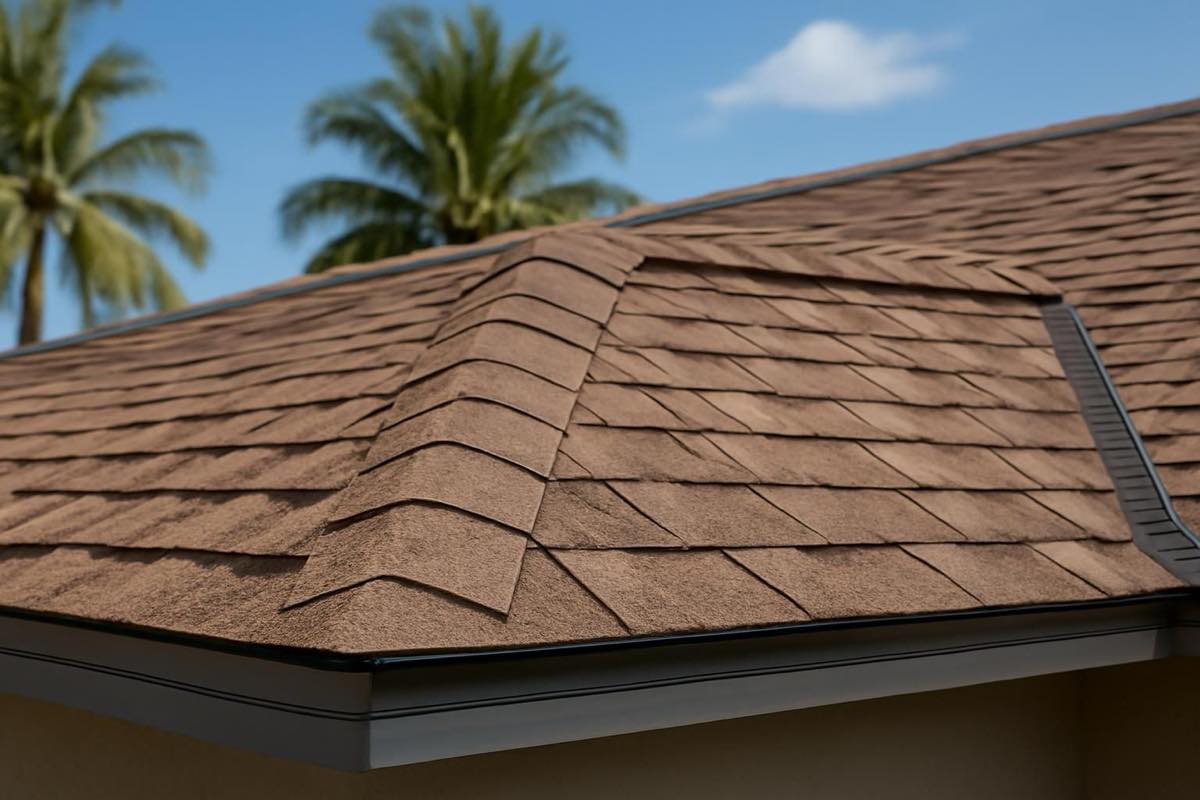
An Xactimate estimate translates field damage into the standardized language property insurance carriers require. Rather than submitting a lump-sum bid, you deliver a granular scope detailing tear-off, starter strips, field shingles, ice and water shields, drip edges, ridge caps, and waste factors.
Backing that scope with aerial measurements and date-stamped jobsite photos removes manual estimation delays. When an adjuster can import verifiable dimensions and exact price-list codes directly into their claim file, you establish the baseline needed to settle actual cash value (ACV) and replacement cost value (RCV) without weeks of pushback.
Source: Storm Xactimate.
Why do insurance adjusters demand an Xactimate estimate from your roofing company?
Carriers rely on Verisk’s Xactimate platform to keep payouts uniform across regions. Verisk establishes local unit rates through an ongoing pricing research methodology that monitors labor and material markets, releasing updated price lists monthly.
Send a generic invoice, a PDF spreadsheet, or a lump-sum quote, and your claim will likely stall on a desk adjuster's screen. Adjusters are trained to evaluate claims through standardized codes. Using standard line items—such as RFG 220 for laminated shingles, RFG DRIP for drip edge, and RFG RIDGC for ridge caps—establishes immediate credibility.
Delivering an ESX data file alongside your PDF scope removes friction. The desk adjuster simply imports your estimate into their claims system, setting a verifiable baseline for approvals and any subsequent supplement negotiations. When your numbers align with active local price lists, the carrier has little ground to dismiss your real-world project costs.
Should you write Xactimate estimates in-house or outsource during peak storm season?
Speed drives cash flow after severe weather. When hail strikes or a hurricane makes landfall, the contractor who produces clean paperwork first generally secures the contract. Bottlenecks cost you signed jobs.
Staffing internal estimators carries steep, fixed overhead:
- A dedicated Xactimate software seat incurs monthly fees whether storm claims are active or not.
- New estimators take months of training to master complex scopes—time you do not have during a storm cycle.
- Documenting a cut-up, 60-square roof with multiple valleys and steep pitches takes hours of focused desk time.
Outsourcing shifts that workload to dedicated writers who turn around complete files within 24 hours of receiving job data. That speed frees your project managers and sales reps to stay in the field—inspecting roofs, meeting property owners, and closing deals while scopes are assembled in the background.
How do you align aerial measurements and photo documentation to support your scope?
An unsupported estimate gets picked apart. To survive carrier audits, pair third-party aerial measurement reports—such as EagleView, Hover, or GAF QuickMeasure—with clear, annotated jobsite photos.
Aerial reports deliver indisputable dimensions: total roof area in squares (SQ), linear footage (LF) for eaves, rakes, and valleys, and predominant roof pitches. If an aerial report shows 200 linear feet of valleys, an adjuster cannot easily dispute your corresponding line items for valley metal or ice and water barriers.
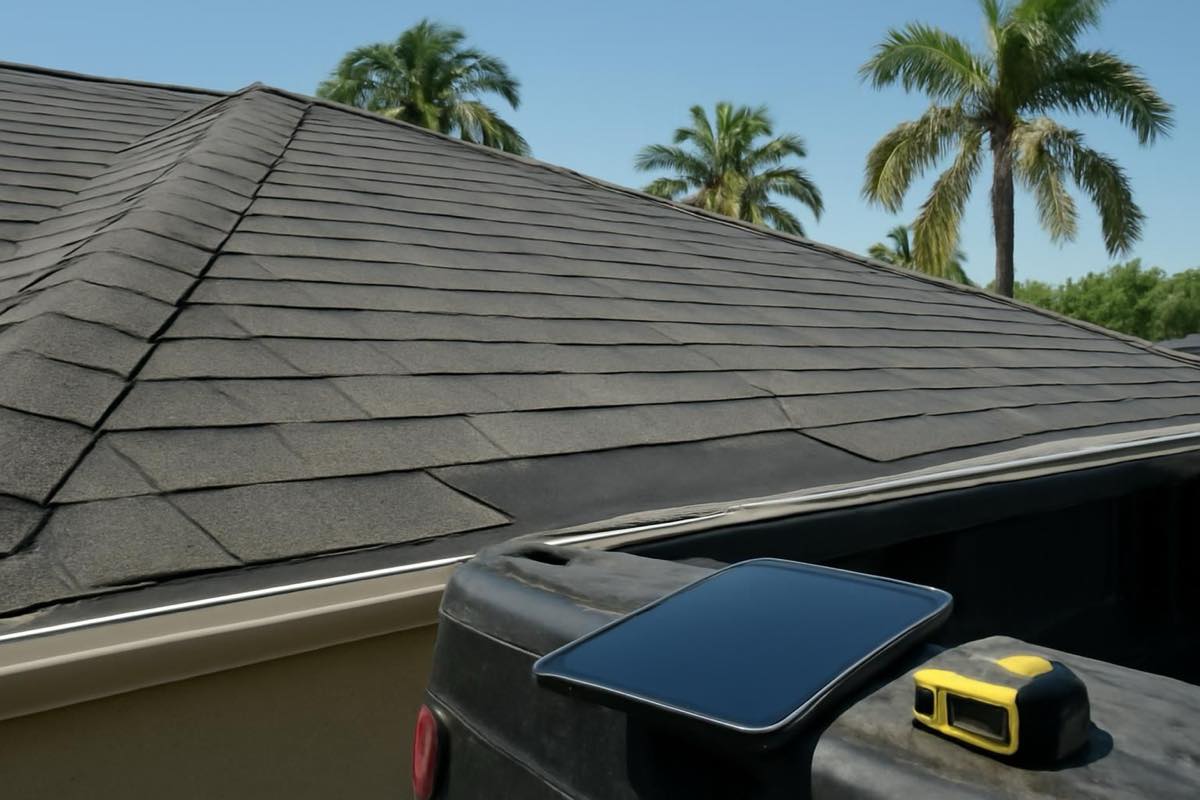
Photos provide the physical proof behind those numbers. Use a pitch gauge set directly on a rafter to confirm steep charges. Photograph the existing drip edge profile and lift shingle edges to document whether a starter strip is present. When your photos prove existing components and damage, and your aerial report validates the dimensions, your scope becomes difficult to deny.
What line items do insurance adjusters consistently leave off roof scopes?
Initial adjuster estimates regularly miss critical installation accessories and labor factors. When contractors overlook these omissions, they absorb the losses or fight prolonged supplement disputes.
Watch for these commonly omitted line items:
- Perimeter and Code Accessories: Drip edge (LF) and dedicated starter courses (LF) are frequently excluded, despite explicit mandates in the International Building Code (IBC) and manufacturer installation instructions required to preserve wind warranties. Valley metal and ice and water barrier (SF) along eaves and valleys are routinely under-measured or missing entirely.
- Access and Labor Surcharges: Steep-pitch modifications (e.g., 7/12 to 9/12, or 10/12 and higher) and multi-story access charges are often left off scopes, even when jobsite photos clearly reveal steep, two- or three-story drops.
- Overhead and Profit (O&P): Adjusters rarely apply O&P voluntarily. However, when a project requires coordinating multiple trades—such as roofing, continuous gutters, and interior drywall repairs—contractors are entitled to O&P to account for project management overhead.
What is the 25% rule for roofing in storm restoration?
Navigating local building codes determines whether a damaged property warrants a repair or a full replacement. Homeowners frequently want to know whether a wind-damaged slope can be patched or requires an entirely new roof.
In hurricane regions like Florida, historical building regulations set firm repair limits. The Florida Building Code (Existing Building) Chapter 7 historically mandated a full replacement if more than 25 percent of a total roof section was repaired or replaced within a 12-month period. Legislative reforms, including Florida Senate Bill 4-D, altered this provision for roofs built or replaced under newer codes.
Differentiate between municipal building code mandates and insurance policy coverage. Building codes dictate legal construction minimums for passing local building inspections; policy language defines what the carrier must pay. Always support code-driven scopes with the adopted municipal ordinance alongside your photo-documented damage.
Should you show a roofing contractor insurance estimate to compare against your initial scope?
Reviewing the adjuster's initial scope before submitting yours works in your favor. It reveals the exact gaps between the carrier's allowance and your project requirements.
Comparing estimates side by side exposes discrepancies instantly:
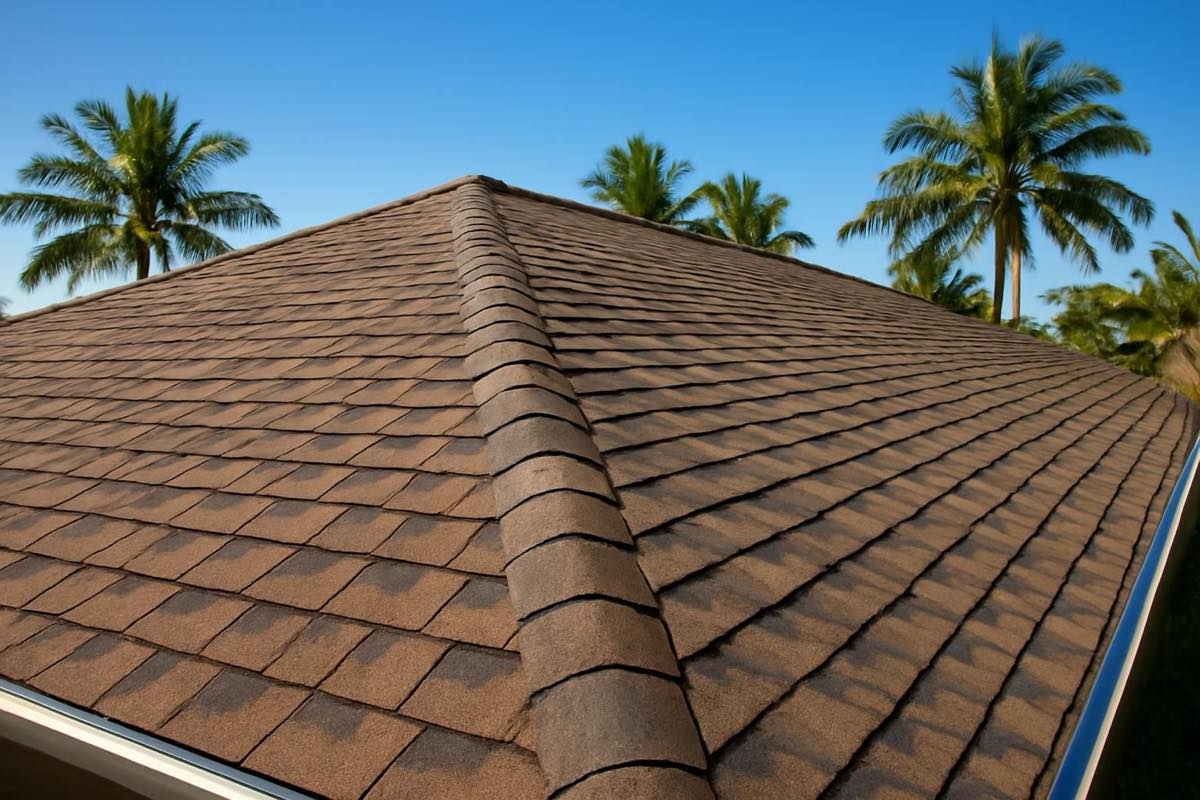
- Low waste percentages applied to cut-up hip or valley roofs.
- Missing secondary tear-off layers.
- Unaccounted ice and water shield runs.
- Missing code-required drip edge or starter strips.
- Omitted steep-pitch and two-story access charges.
Loading the carrier's scope enables you to build a targeted supplement. Instead of arguing across two entirely different estimates, you address specific missing items line by line.
How Storm Xactimate handles this for you
Storm Xactimate builds carrier-grade estimates for storm restoration contractors. Upload your property information, claim details, field photos, and existing measurement report—or let Storm Xactimate order the aerial report directly at no added charge.
Every estimate is drafted using current local price lists, reviewed by an experienced estimator, and returned within 24 hours of receiving complete job data. You receive the native ESX file, a clean PDF scope, roof diagrams, organized photo sheets, and your company branding on the cover page.
If an adjuster pushes back or leaves off required code items like drip edge, valley barrier, or starter courses, you are covered. Every order includes one full revision round for adjuster counter-estimates submitted within 30 days of delivery. Estimates strictly reflect the damage verified in your photos and reports to keep every line item defensible. Start an estimate with Storm Xactimate.
Frequently Asked Questions
What files should a roofing contractor provide to a carrier?
To prevent delays, send a complete submission packet:
- The itemized estimate PDF.
- The raw ESX data file for adjuster import.
- Annotated jobsite photos showing damage, pitch gauges, existing drip edge, and starter courses.
- An aerial measurement report verifying total area (SQ), perimeter runs, and valley lengths (LF).
Can overhead and profit (O&P) be included on every roofing estimate?
No. Carriers do not include O&P on standard, single-trade shingle replacements. O&P applies when a restoration scope requires general contractor coordination across multiple distinct trades—typically three or more, such as roofing, gutters, and interior drywall repairs—subject to carrier guidelines and individual policy provisions.
Why do adjuster estimates often show a lower waste percentage than the contractor's scope?
Desk adjusters often apply default waste factors (such as 10 percent) without accounting for roof complexity. Hip roofs, valley cuts, starter strips, and ridge requirements generate substantial scrap. Aerial cut sheets and pitch diagrams prove when geometry requires a 15-to-20 percent waste factor to install the roof correctly.